
The Role — and the Risks — of Compounding Pharmacies
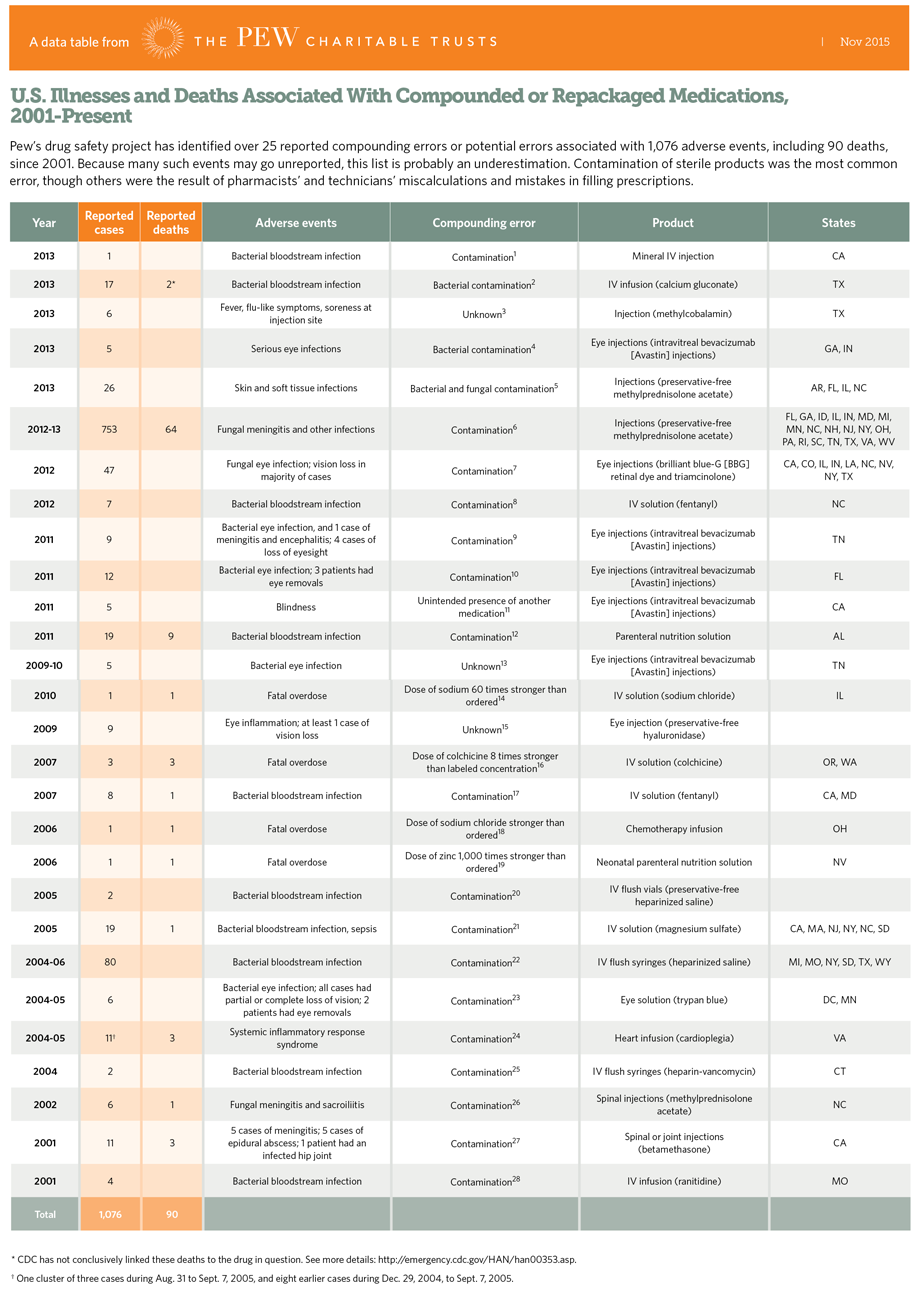
Compounding pharmacies play a valuable role when patients need a custom medicine — such as a unique dose, liquid form, or ingredient change — or when drug shortages leave no other option. But, unlike manufacturers, compounding pharmacies don’t have to meet the same strict FDA standards for testing, safety, or quality control. As a result, the quality and safety of compounded drugs may not be consistent or fully reliable.
For these reasons, their use should be limited to patient-specific preparations and adding emergency supply during drug shortages. Using them as a shortcut for lower prices or supply can put patients at risk and undermine confidence in medicines produced under the proven FDA standards that ensure medicines are both safe and effective.

Tell Congress!
News & Articles
Column: Drug compounding has changed. Oversight should too
By Michael Reilly | Guest Columnist
PUBLISHED: August 31, 2026
The ability to trust America’s medicines is one of our greatest public health successes. Most people rarely think about it, and that’s exactly how it should be. Decades of scientific advancement, rigorous manufacturing standards and regulatory oversight work together behind the scenes to help ensure medicines are safe, effective and consistently manufactured before they ever reach patients.
Doctors fear possible contaminated counterfeit peptide batch after seventh case of acute liver damage
In short:
There are fears a “contaminated batch” of counterfeit peptides is causing hospitalisations for acute liver toxicity.
The latest patient became seriously unwell after taking unapproved peptide labelled as retatrutide.
What’s next?
Doctors are testing the counterfeit peptides linked to the liver failure cases, amid warnings that unapproved products can cause serious harm.
Two deaths were reported to the FDA. Is the bootleg weight-loss drug “Reta” to blame?
The Food and Drug Administration received reports in recent months that two people died after taking bootleg versions of an experimental weight-loss drug, according to documents reviewed by CBS News.
The reports link the deaths to products claiming to be retatrutide, a drug being developed by Eli Lilly that hasn’t been approved by the FDA. Federal law prohibits the commercial sale of unapproved drugs, but that hasn’t stopped vendors from selling imitation versions of the experimental drug online at a scale with no modern precedent.
Retatrutide and America’s New Bootlegger Economy
By Peter J. Pitts |
Americans once associated bootlegging with bathtub gin, counterfeit liquor, and criminal syndicates exploiting Prohibition-era loopholes. Eliot Ness built his reputation chasing criminal networks that profited by selling dangerous, unregulated alcohol to consumers who had no idea what was in the bottle. Nearly a century later, America faces a biotech version of the same racket — only today’s bootleggers wear wellness-brand hoodies, operate through anonymous peptide websites, telehealth-style storefronts, influencer-driven social media channels, and online marketplaces selling products labeled “retatrutide” before FDA has even approved the drug.
The technology changed. The contempt for regulation has not.
How risky can the weight-loss drug boom be? I learned the hard way.
Jimmie Wilson | Jimmie Wilson is president of the JADA Foundation.
Millions of Americans have increasingly turned to GLP-1 medications to lose weight and improve their health. These drugs have transformed treatment for obesity and diabetes and helped countless patients. But their popularity has also fueled a thriving market for unregulated copycat versions.
Featured
New testing of black market peptides reveals dangerous dosing levels
By national health equity reporters Rachel Carbonell and Caitlyn Gribbin, and Andi Yu
Those Viral Bodega Peptides Aren’t Actually Peptides
Wired | Sophie Kleeman, Kate Knibbs | September 15, 2026
Compounding must not become a drug-approval shortcut for Big Wellness
By Philip J. Schneider and Ronald P. Jordan
National Consumers League Commends FDA for Swift Action Against Hims & Hers
National Consumers League (NCL) | Media Contact: Lisa McDonald
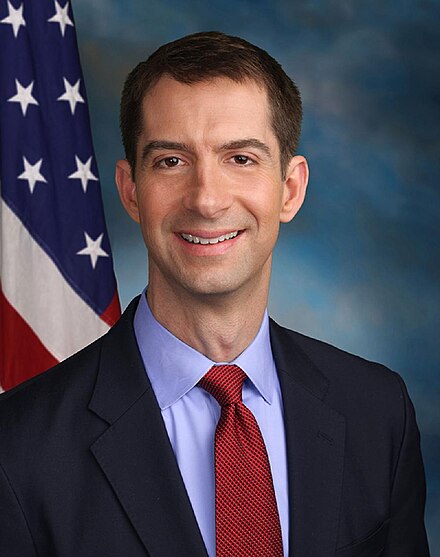
Tom Cotton demands FDA probe into illegal Chinese ingredients in US weight loss drugs
By Alex Miller | Fox News
UPDATE: FDA's Makary pledges crackdown on mass marketing of 'illegal copycat drugs' in wake of Hims' Wegovy pill push
Fierce Pharma | By Fraiser Kansteiner

GLP-1 Compounders Endangering Americans
DC Journal | John Hertig

PSM statement on ‘deeply concerning’ compounding of GLP-1 weight-loss pills
Partnership for Safe Medicines
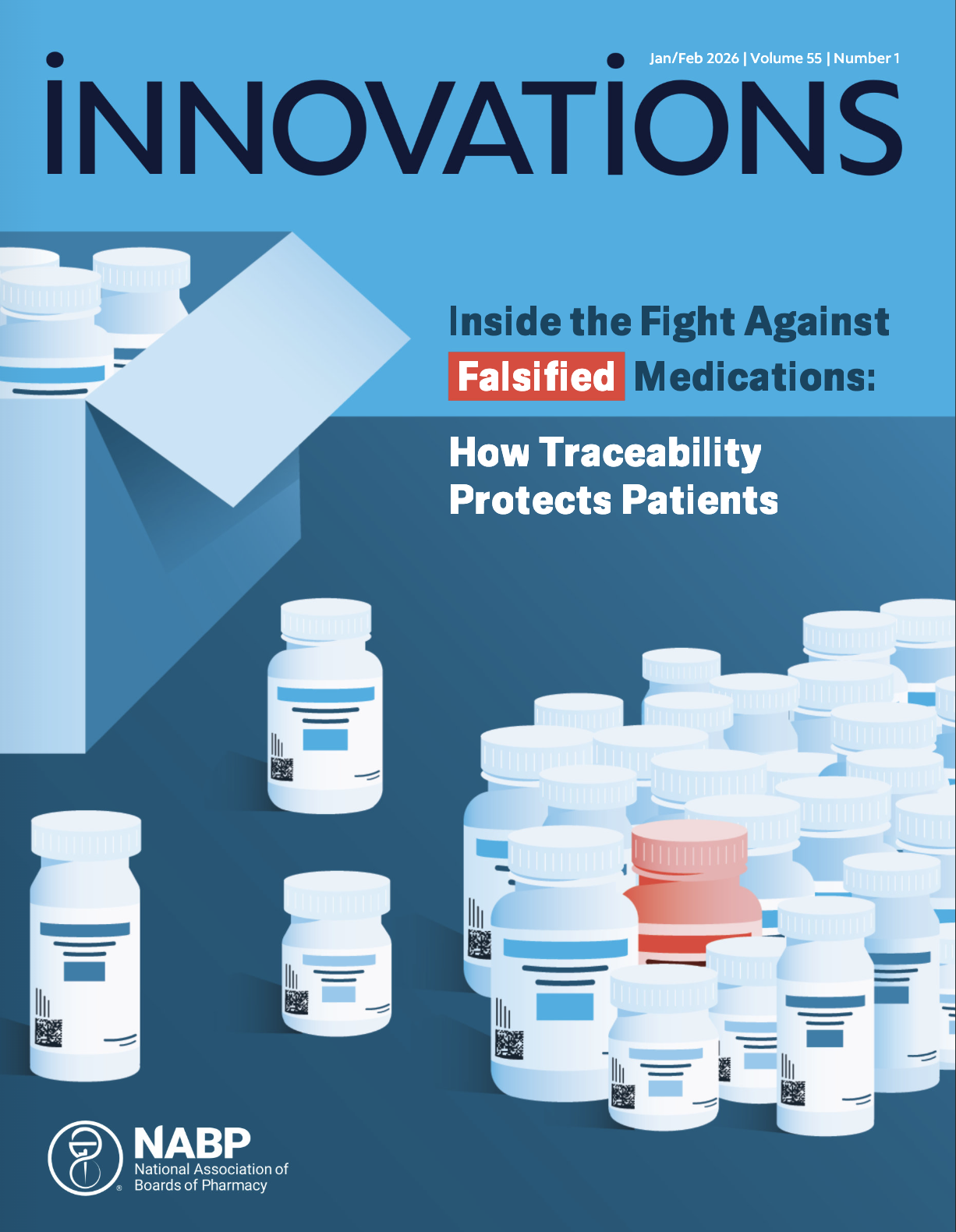
Injecting Clarity: The State of Medical Spa Regulation in the US
John B. Hertig, PharmD, MS, CPPS, FASHP, FFIP, Hertig Healthcare Advising, LLC
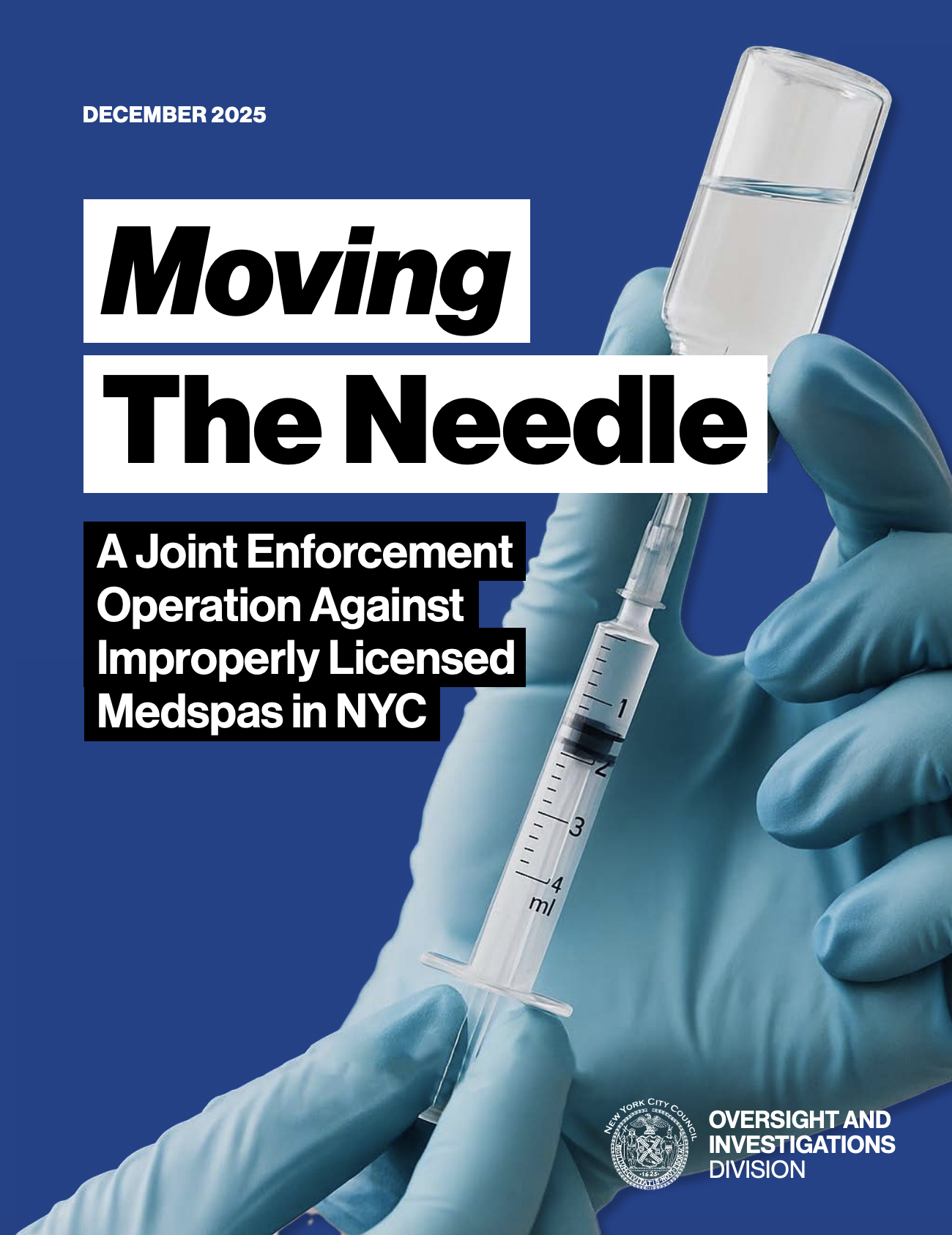
Moving the Needle: A Joint Enforcement Operation Against Improperly Licensed Medspas in NYC
The New York City Council Oversight and Investigations Division

Prescription Drug Freight Fraud Report, November 2025
The Partnership for Safe Medicines
Compounding Pharmacies Are Not a Solution to High Drug Costs
DC Journal - Philip J. Schneider and Ronald P. Jordan | March 24, 2025
Compounding Without Safeguards: A Prescription for Risk
Washington Times | By Philip J. Schneider & Ronald P. Jordan
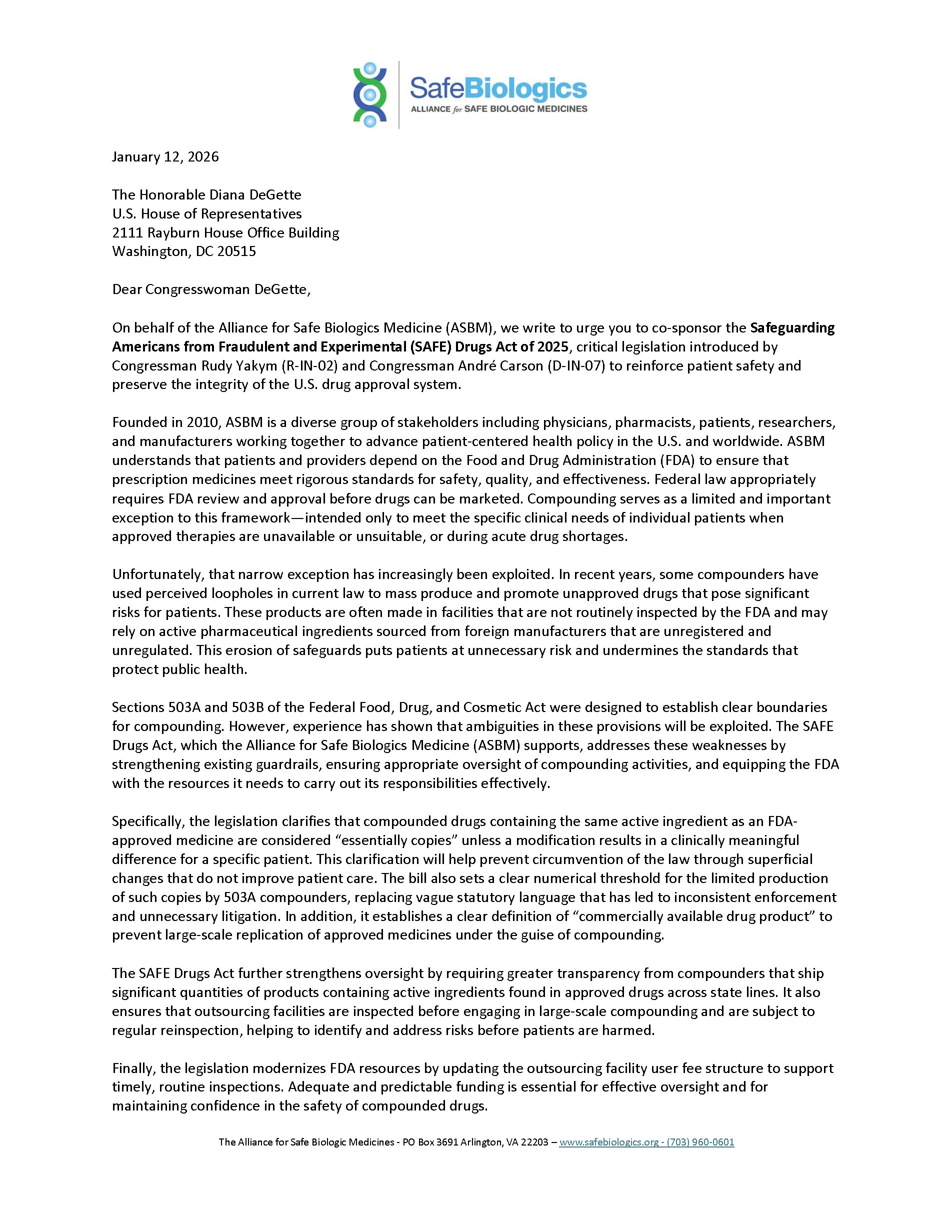
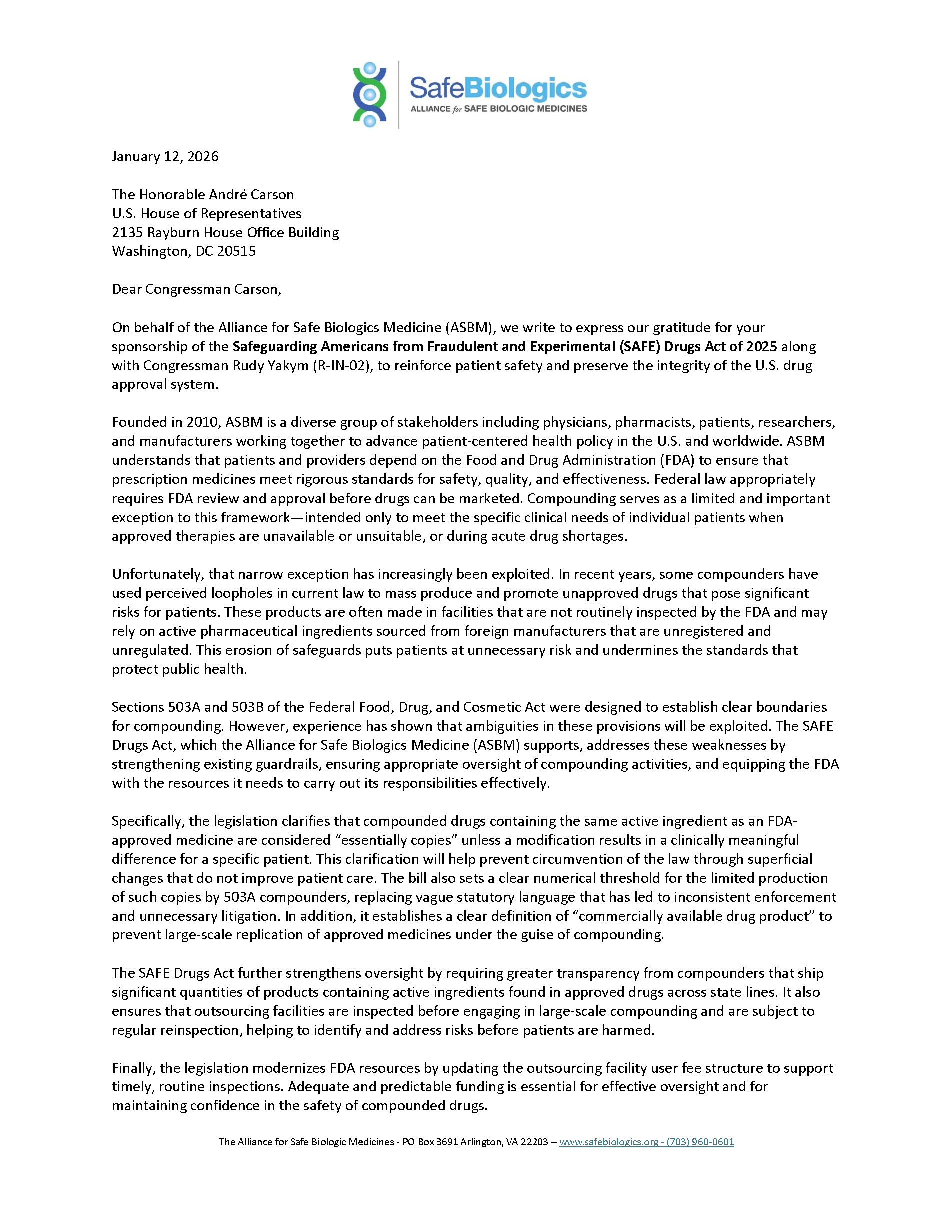
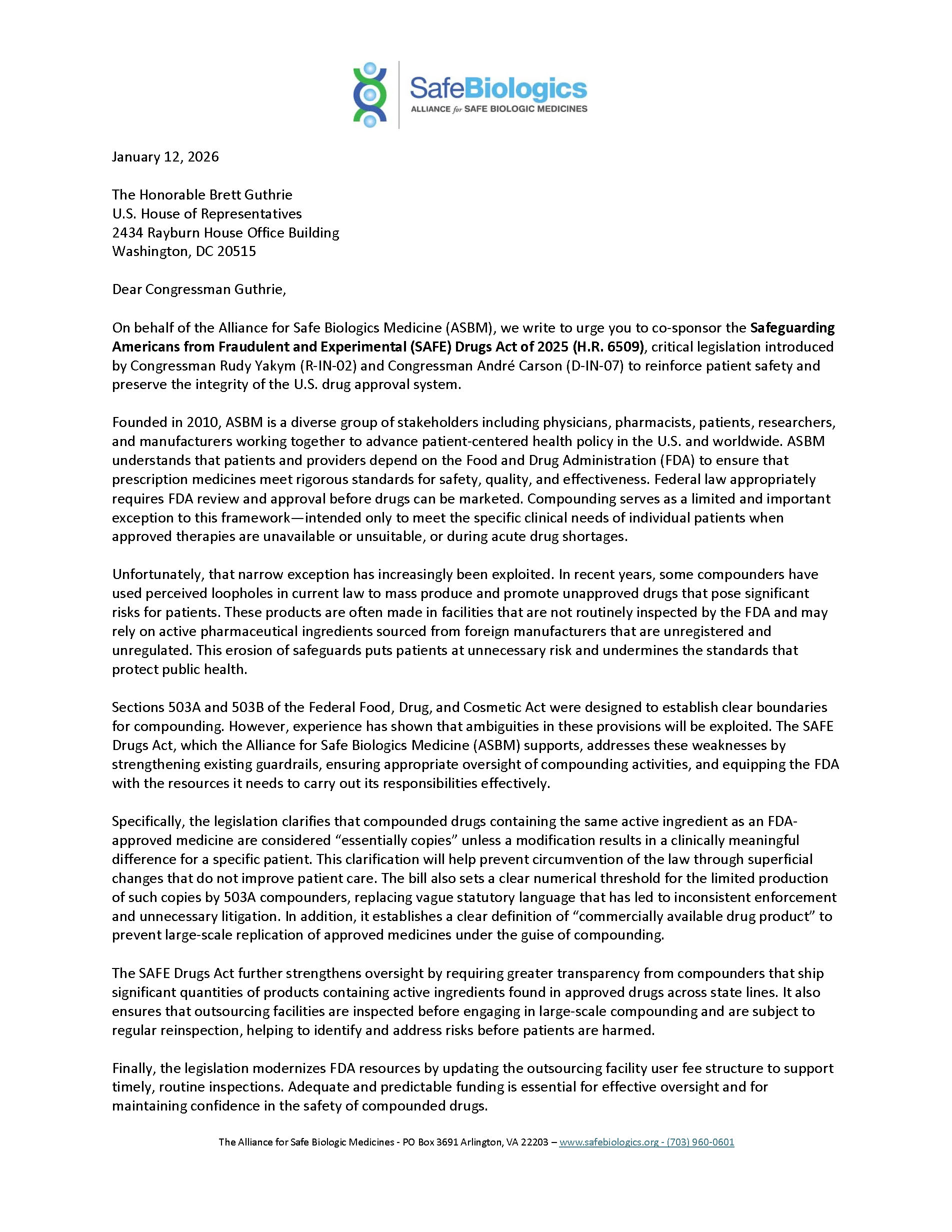
ASBM Letters in Support of SAFE Drugs Act of 2025
ASBM Statement on FDA Commissioner’s Comments Regarding Compounded Medicines
The Alliance for Safe Biologic Medicines (ASBM) welcomes FDA Commissioner Marty Makary’s comments on the social media platform X affirming that “the FDA cannot verify the quality, safety, or effectiveness of non-approved drugs” and warning that the agency will “take swift action against companies mass-marketing illegal copycat drugs.” These remarks accurately reflect ASBM’s longstanding concern regarding large-scale compounding pharmacies that copy FDA-approved medicines while sidestepping the FDA’s rigorous safety, quality, and oversight standards that protect patients.
Legislation
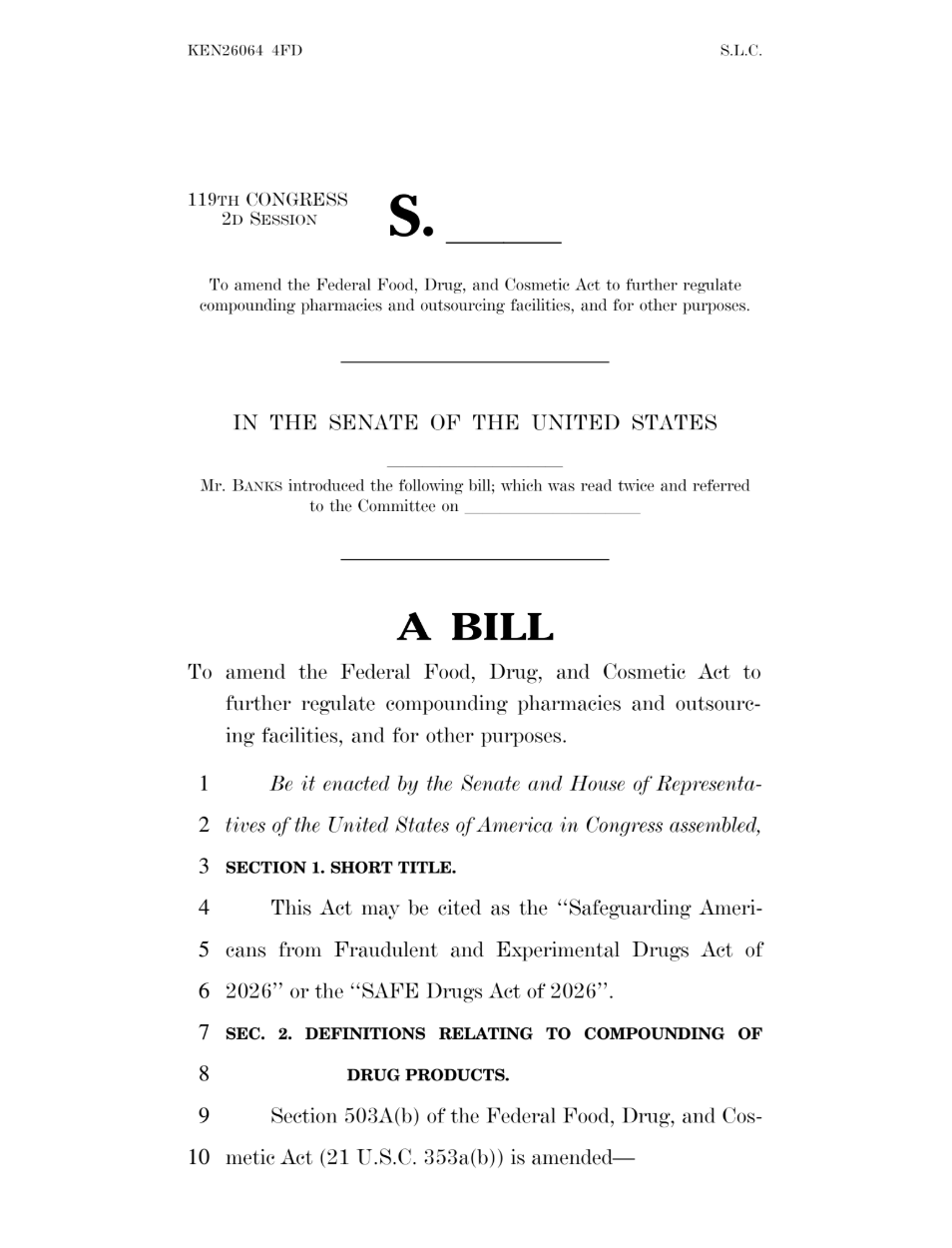
Senator Jim Banks Introduces SAFE Drugs Act to Crack Down on Risky and Fraudulent Weight Loss Drugs
This week, Senator Jim Banks (R-Ind.) introduced the Safeguarding Americans from Fraudulent and Experimental (SAFE) Drugs Act. The bill would strengthen existing guardrails and close loopholes in the Food, Drug, and Cosmetic Act to stop unapproved compounders from mass-producing risky drugs in unregulated and uninspected facilities. Senator Martin Heinrich (D-N.M.) cosponsored the bill.
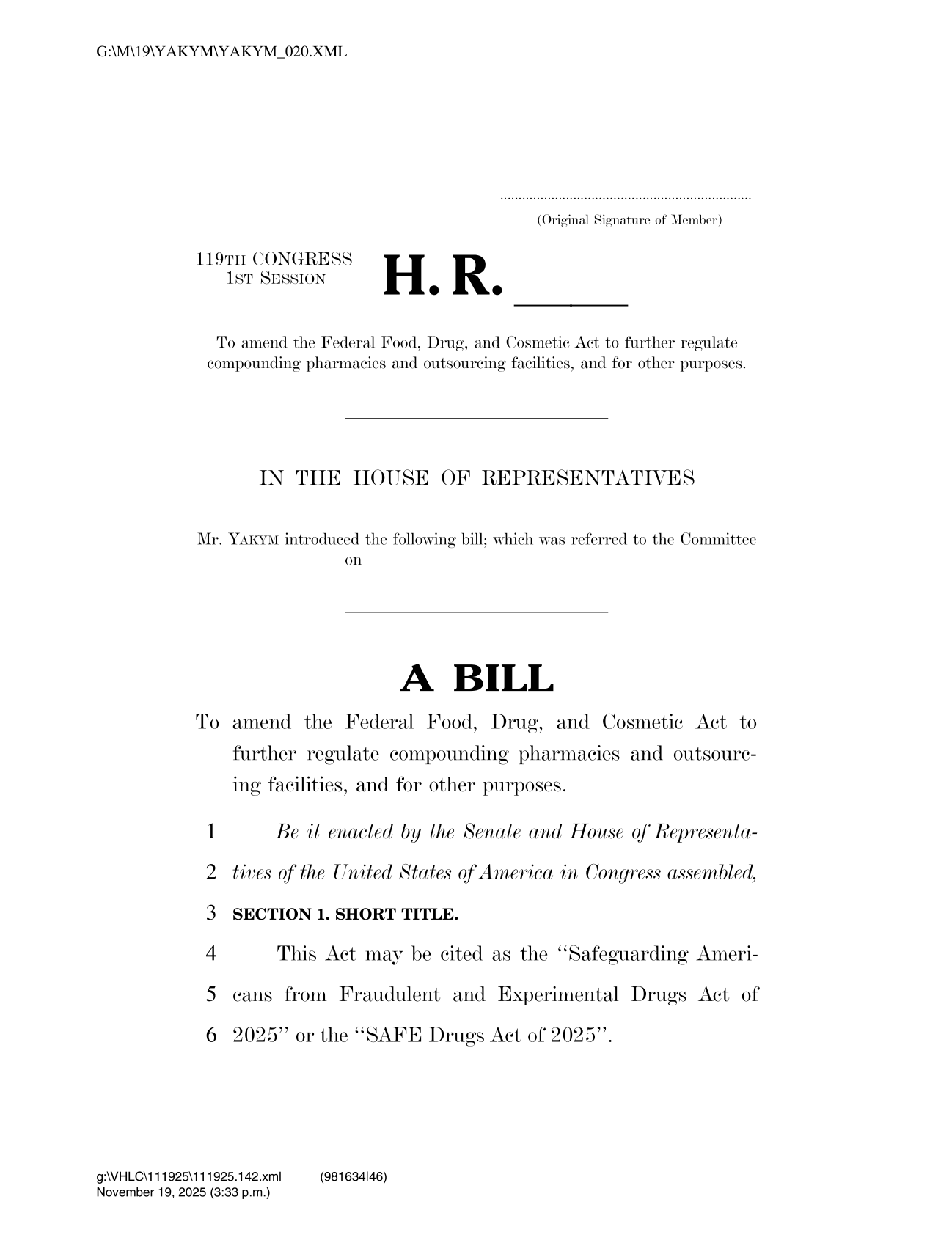
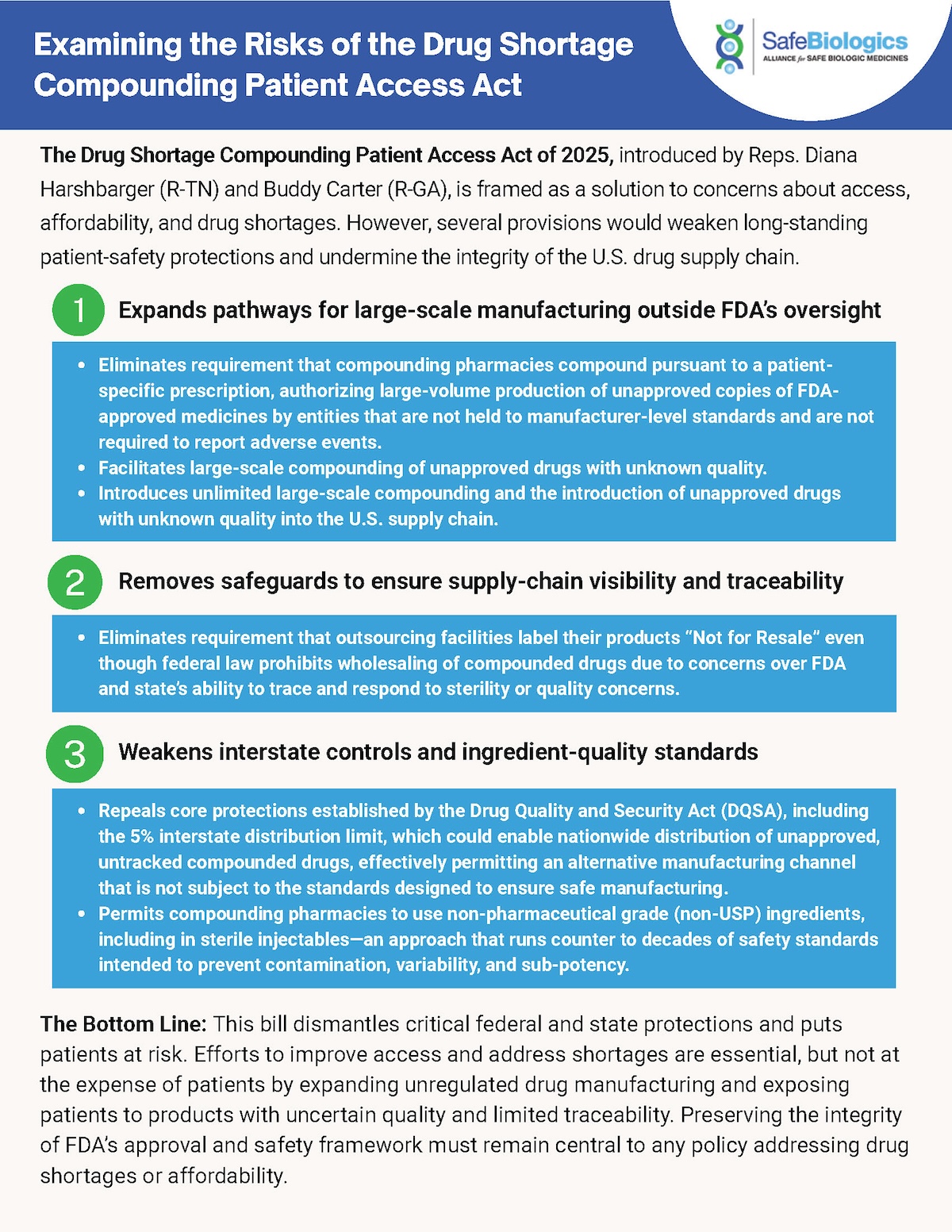
SAFE Drugs Act of 2026
Congressman Rudy Yakym (R-IN-02) and Congressman André Carson (D-IN-07) introduced the “Safeguarding Americans from Fraudulent and Experimental (SAFE) Drugs Act of 2025” to protect patients from untested, unapproved, and potentially dangerous mass compounded drugs.
Resources
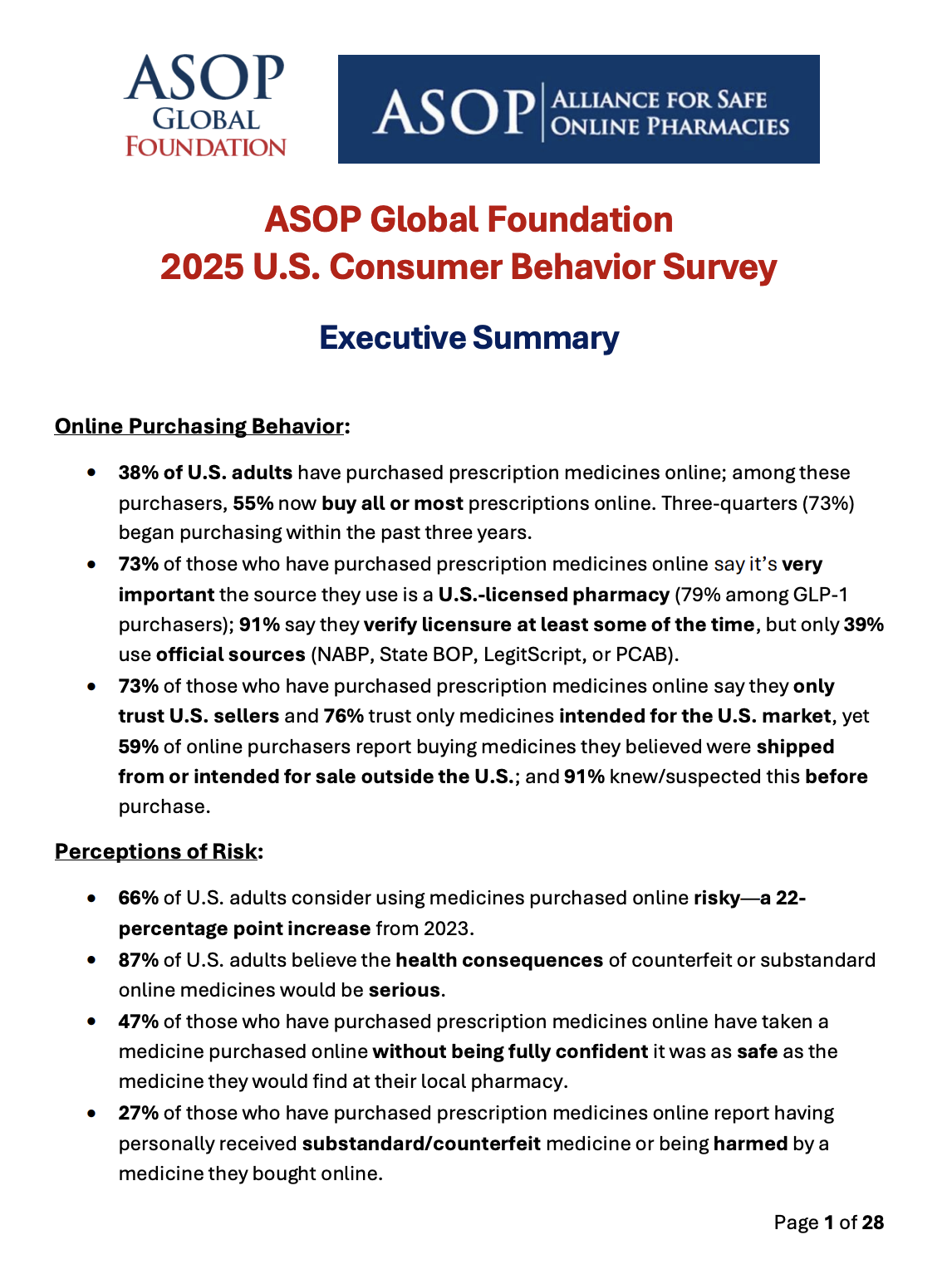
ASOP Foundation 2025 Consumer Behavior Survey
The ASOP Global Foundation conducted this survey to assess how Americans perceive, purchase, and evaluate the safety of prescription medicines sold online.
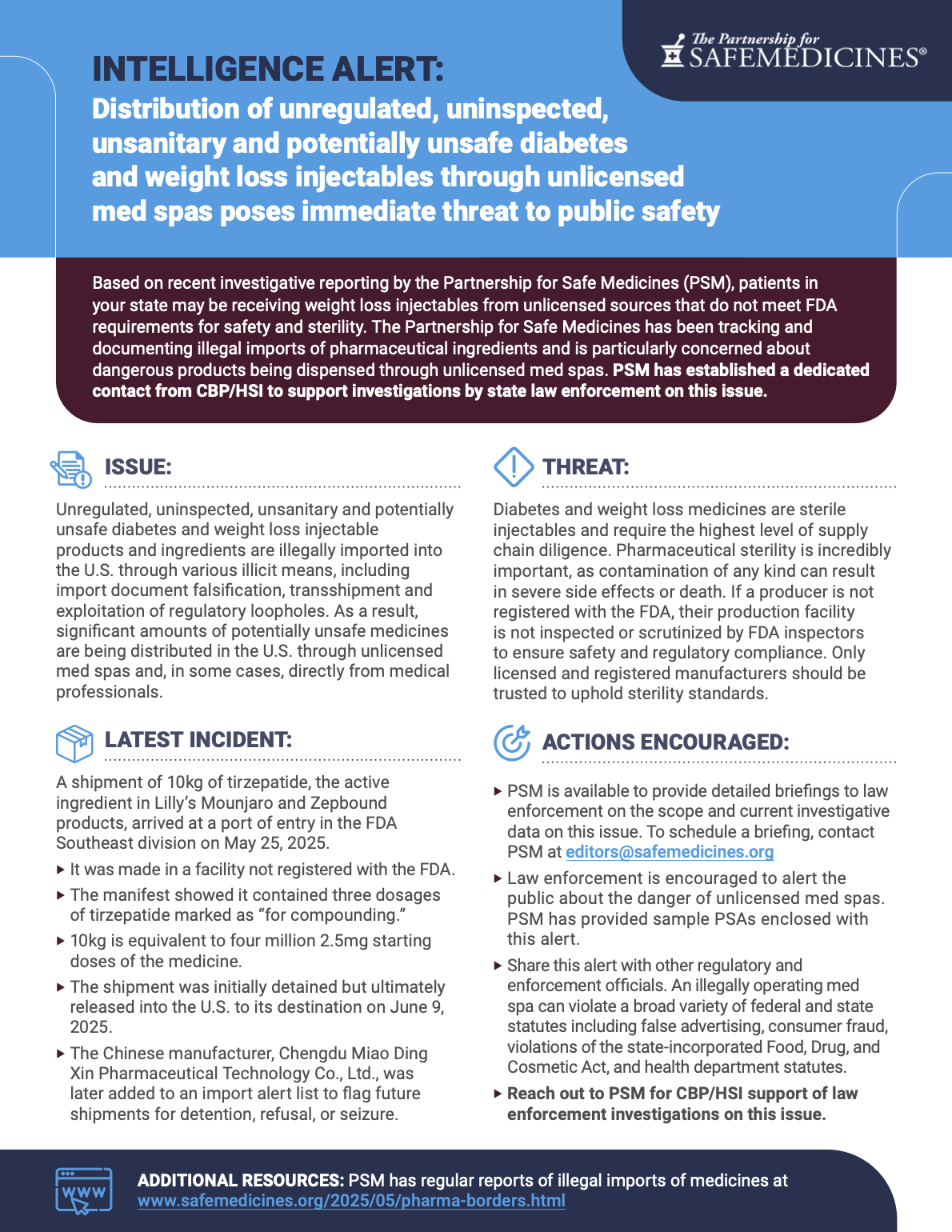
INTELLIGENCE ALERT:
Distribution of unregulated, uninspected, unsanitary and potentially unsafe diabetes and weight loss injectables through unlicensed med spas poses immediate threat to public safety.
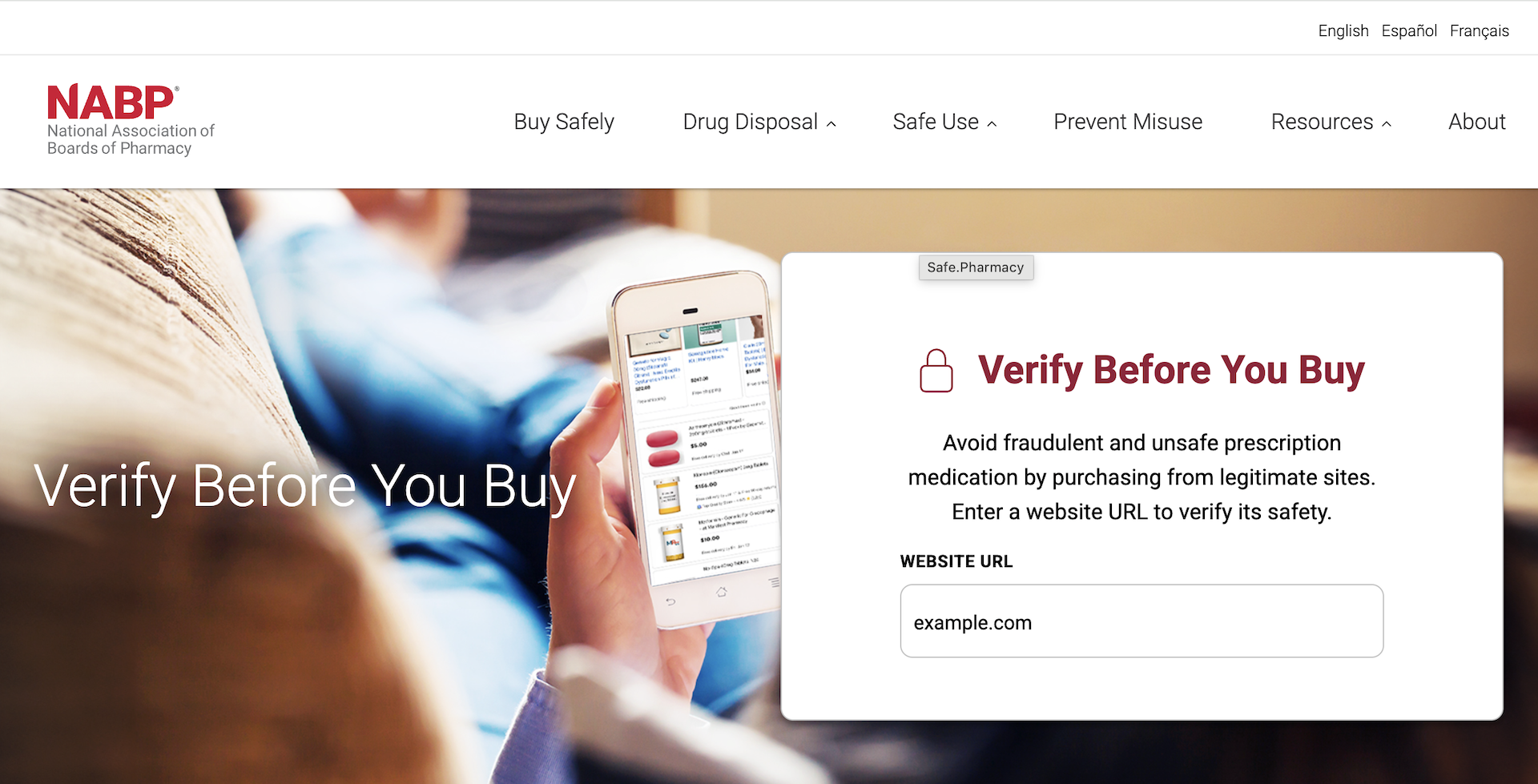
Verify Before You Buy Website
Avoid fraudulent and unsafe prescription medication by purchasing from legitimate sites. Search a website URL to verify its safety.
FDA Resources for Human Drug Compounding
FDA’s compounding program aims to protect patients from poor-quality compounded drugs, while preserving access to lawfully-marketed compounded drugs for patients who have a medical need for them.
The Alliance for Safe Biologic Medicines (ASBM) is a diverse coalition of stakeholders, including physicians, pharmacists, patient advocates, researchers, and biopharmaceutical manufacturers. Since 2010, ASBM has worked with regulators worldwide to shape policies that reflect the best interests of patients, ensuring access to lifesaving and life-enhancing medicines while fostering innovation in healthcare.